

Kim Dotcom Could Seek New Zealand Trial After Co-Defendants Strike Deal
Often described as the biggest case in copyright history, the so-called ‘Mega Conspiracy’ battle has been living up to its billing since 2012. For at least a decade, Kim Dotcom and co-defendants Mattias Ortmann, Bram van der Kolk, and Finn Batato faced a mountain of charges in the United States, a country that has never been visited by the former. More recently, however, there has been a significant shift in positions, meaning that...

U.S. Senator Targets Disney With Bill Limiting Copyright Protection Term
Over the past decades, copyright protection terms have gradually been extended all around the world. In the United States, copyrights are currently enforceable for 70 years after the author’s death. If something was made for hire, protection is available for 95 years after publication or 120 years after creation, whichever is shorter. These terms were last changed in the Copyright Term Extension Act of 1998, which is also dubbed the...

How collaborative commons and open organization principles align
How collaborative commons and open organization principles align Ron McFarland Thu, 05/12/2022 – 03:00 1 reader likes this 1 reader likes this I have read Jeremy Rifkin’s book The Zero Marginal Cost Society: The Internet of Things, the Collaborative Commons, and the Eclipse of Capitalism, which has a strong connection to open organization principles, particularly community building. Rifkin also writes about the future of...
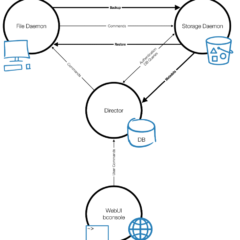
Get started with Bareos, an open source client-server backup solution
Get started with Bareos, an open source client-server backup solution Heike Jurzik Thu, 05/12/2022 – 03:00 1 reader likes this 1 reader likes this Bareos (Backup Archiving Recovery Open Sourced) is a distributed open source backup solution (licensed under AGPLv3) that preserves, archives, and recovers data from all major operating systems. Bareos has been around since 2010 and is (mainly) developed by the company Bareos GmbH...

5 reasons to use sudo on Linux
5 reasons to use sudo on Linux Seth Kenlon Thu, 05/12/2022 – 03:00 1 reader likes this 1 reader likes this On traditional Unix and Unix-like systems, the first and only user that exists on a fresh install is named root. Using the root account, you log in and create secondary “normal” users. After that initial interaction, you’re expected to log in as a normal user. Running your system as a normal user is a...

